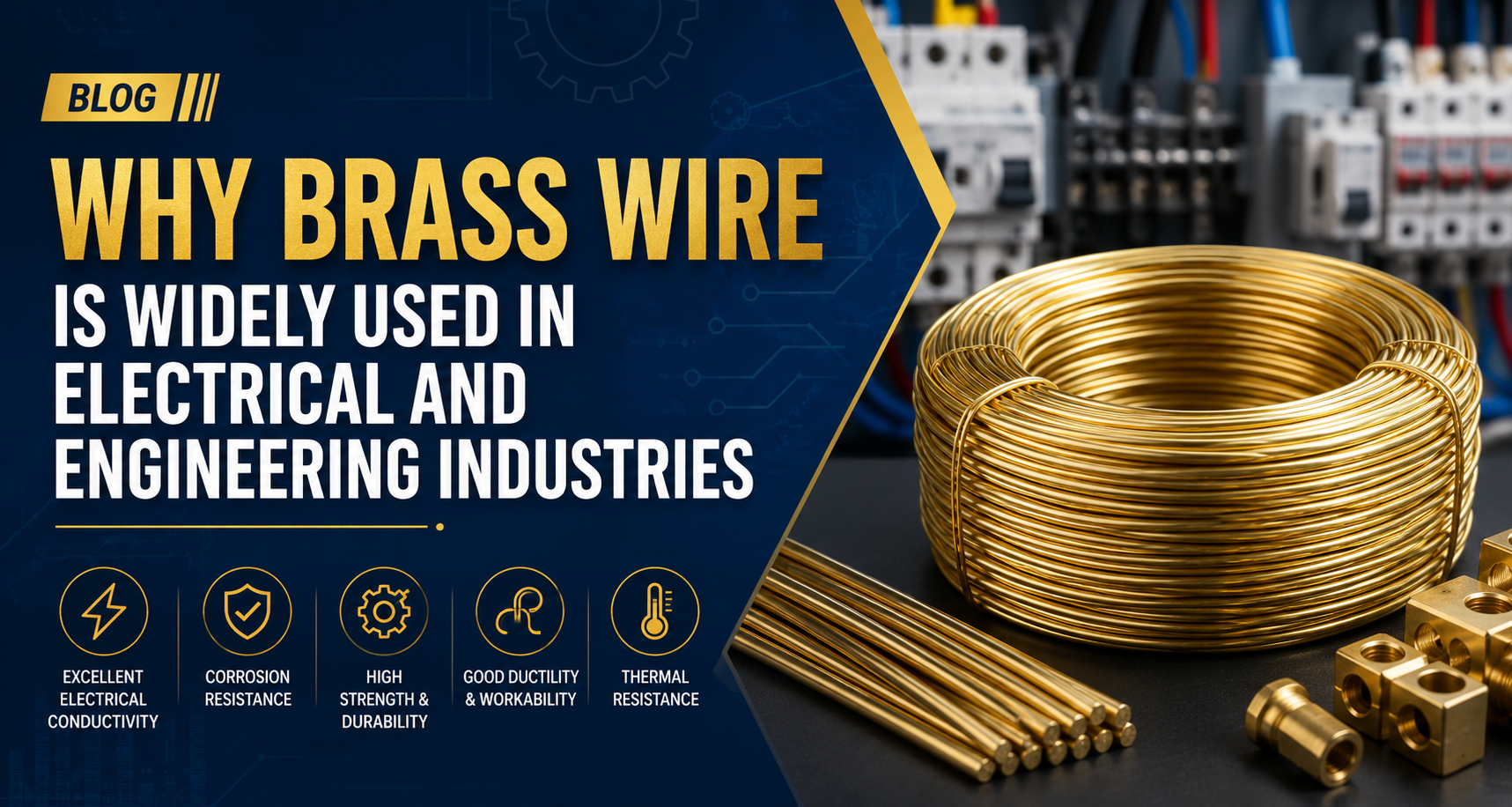
Why Brass Wire Is Widely Used in Electrical and Engineering Industries

Why Brass Wire Is Widely Used in Electrical and Engineering Industries

Brass is one of the most versatile, flexible and durable metals. Its exclusive features and cost-effectiveness make it one of the most widely used metals in electrical and engineering industries. Brass is made from the combination of copper and zinc. Brass wires are often used for many electrical applications.

Excellent conductivity:

Brass wires possess amazing conductivity. They are suitable for electrical terminals, connectors, switches and other components in power systems. Although brass wires do not have the high conductivity of copper, their strength and durability make them ideal for a range of electrical applications.

High Corrosion Resistance:

Brass wires are corrosion-resistant. They are ideal for industries which are prone to moisture, chemicals and difficult chemical environments. The performance and strength of brass wires remain unchanged even after long-term use.

Strong and Durable:

The mechanical strength of brass wires is unmatched. They are capable of withstanding high pressure, continuous usage, and industrial wear and tear. They are ideal for high-impact, high-intensity engineering and manufacturing operations.

Ease of fabrication:

Brass wires are flexible and can be moulded as required to meet the fabrication requirements. It can be easily bent, moulded, cut, and welded into different shapes and sizes to meet engineering and electrical needs.

Cost-effective:

Brass provides a good balance between performance and affordability. The price of brass wire is reasonable compared to copper wire. Therefore, brass is the first choice for many industrial applications and engineering systems.

Wide Industrial Applications:

Brass wire is commonly used in electrical fittings, fasteners, decorative products, musical instruments, automotive components, mesh manufacturing, and engineering tools.

Conclusion

Conductivity, superior strength, corrosion resistance and flexibility make brass wire an ideal choice for electrical and engineering industries. These wires are well-suited for demanding industrial conditions. It ensures long-term reliability and productivity. Businesses looking for quality brass products should also compare the brass wire price to make an informed decision.
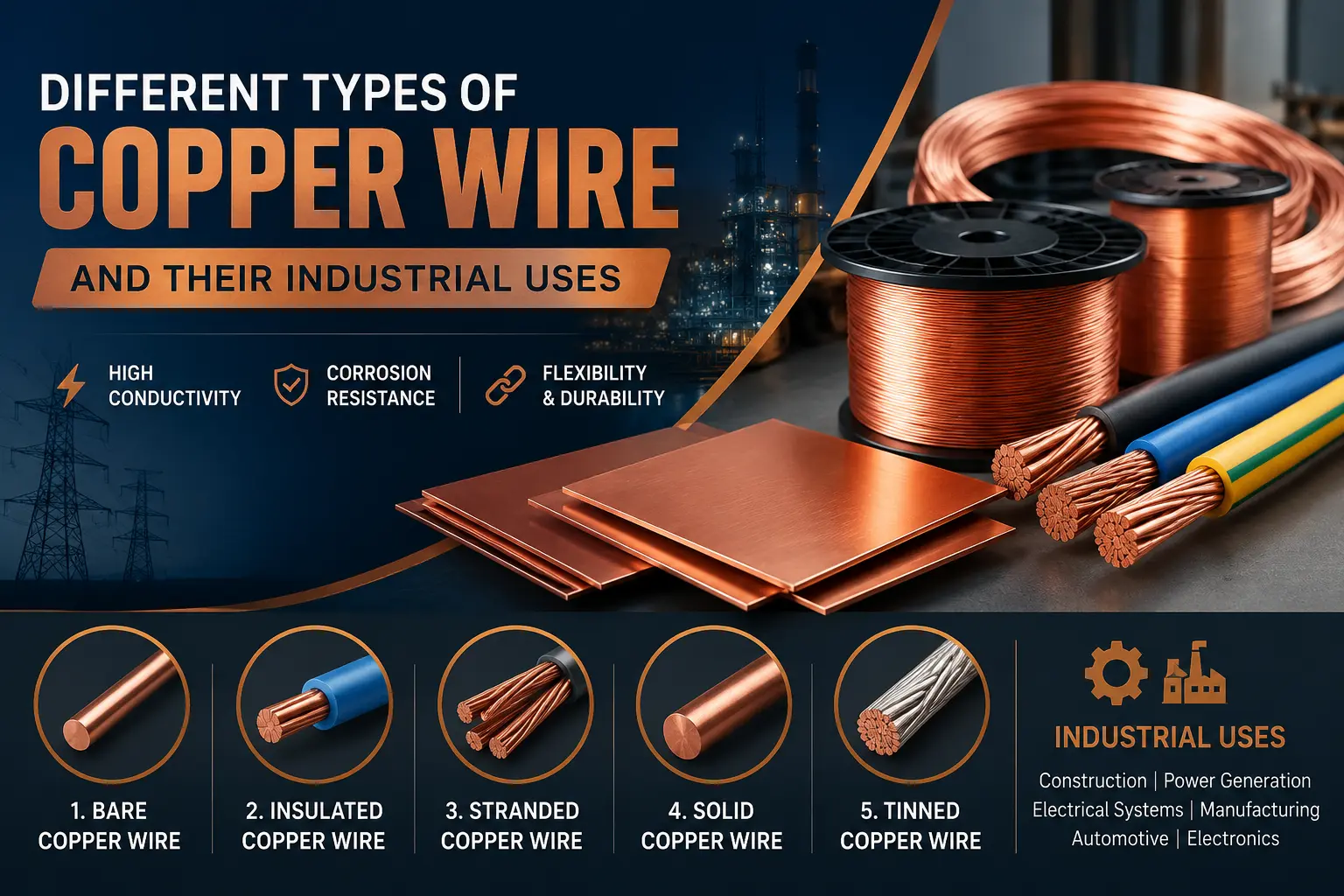
Different Types of Copper Wire and Their Industrial Uses

Different Types of Copper Wire and Their Industrial Uses

Copper wire acts as an essential element in both electrical and industrial systems, identified for its enhanced conductivity, flexibility, and durability. Different kinds of copper wires are used to meet different industrial demands, usually in conjunction with copper sheets and thin copper sheets to enhance system performance. 

Types of Copper Wire and Its Applications 

1. Bare Copper Wire 

Bare copper wire refers to copper wire that is not coated. Such wire is usually used for grounding and electrical transmission. It offers maximum conductivity and is usually used in conjunction with copper sheets to ensure maximum energy transmission.

2. Insulated Copper Wire 

The copper wire is coated with insulating materials like PVC or rubber. This type of wire is used in electrical wiring for residential and industrial purposes. Industries that use thin copper sheets can use this type of wire to maintain compact electrical systems. 

3. Stranded Copper Wire 

The stranded copper wire comprises thin copper wires that are twisted together. This type of wire is very flexible and can be used in systems where frequent movement is required. It can function efficiently with copper sheets in dynamic industrial systems.

4. Solid Copper Wire

The solid copper wire comprises a single strand that is thick. This makes the wire strong and durable. The wire is usually used in building wiring and heavy-duty applications. At such times, copper sheets are used in combination with the wire to ensure compact design.

5. Tinned Copper Wire

Tinned copper wire comprises a thin coating of tin. This wire is resistant to corrosion and is usually used in applications exposed to chemicals and moisture. It is also used in combination with copper sheets.

Industrial importance of copper wires

Copper wires are of great importance to industries such as construction and power generation. The compatibility of copper wires with copper sheets enables the development of compact industrial solutions without compromising performance. The integration of copper wires with copper sheets is beneficial for improving conductivity and heat dissipation of industrial equipment.

The knowledge of different kinds of copper wires enables industries to utilize the most appropriate kind of copper wire for their needs. The integration of copper wires with copper sheets and thin copper sheets enables the development of reliable industrial solutions.

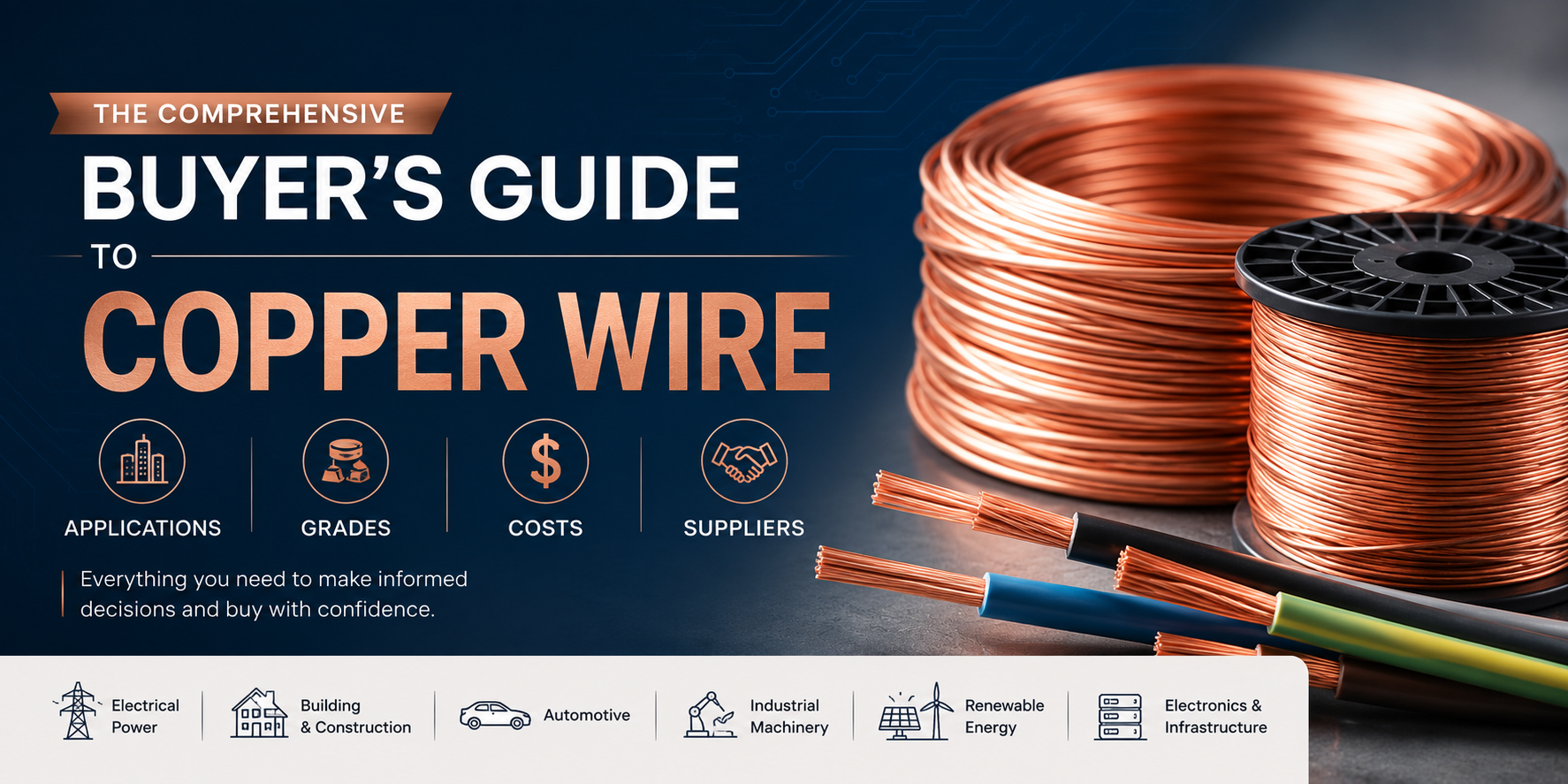
The Comprehensive Buyer’s Guide to Copper wire: Applications, Grades, Costs, and Suppliers

The Comprehensive Buyer’s Guide to Copper wire Applications, Grades, Costs, and Suppliers

Copper is “Gold standard” used in industrial and electrical applications. Copper is a crucial material in industrial applications because of its unparalleled conductivity, malleability, and heat resistance. This guide will give you all the information you need to make an informed purchase. 

1. Conventional Copper wire Uses: 

Copper is used in all industries because of its versatility. Copper has multiple applications based on its coating and thickness.

Automotive Industry: Whether it is window motors or advanced sensors, today’s cars are filled with copper wire by the mile. 

Industrial machinery: Copper windings are most needed for the efficient functioning of motors, transformers, and generators.

Electrical cabling: The best use in both residential and commercial buildings because of its high conductivity and safety.

 • Telecommunications: Required for phone and internet connectivity cabling, 

2. Grading of Copper 

Level of GradePurityCommon Use
Electrolytic tough pitch (ETP).
OF (Oxygen-Free) 
99.90%general electrical applications and busbars
OF (Oxygen-Free)99.95%+High-end scientific and audio equipment
Bare copper. Highstandard overhead transmission and grounding for bare copper
Tinned CopperVariablemarine environments (resists corrosion)

3. Elements That Affect the Copper Wire Price 

The price of copper is constantly fluctuating. Many factors that influence it, and it is considered a global commodity:

• LME Rates: Daily, the London Metal Exchange sets the base copper wire price globally. 

• Purity & Gauge: Because of the increased time required in production, the copper wire price of thinner wires (higher gauge) per kilogram may be higher. 

• Insulation: If it is a “bare” wire or insulated with enamel, PVC, or Teflon will impact the final price of the insulation. 

• Market Demand: Price hikes are often driven by market trends in the production of electric vehicles (EVs) and renewable energy sources.

4. Selecting the Appropriate Supplier

While the material is of prime importance, the selection of a reliable partner is also equally important. In many cases, the most reliable copper wire supplier in Mumbai is the best option for businesses operating in the industrial hubs of India. With its massive volume of trade and proximity to major ports, Mumbai acts as a massive distribution hub with favourable prices. When evaluating a supplier, ensure that you check for:

  1. ISO certification.
  2. A “Mill Test Certificate” (MTC) 
  3. Logistic facility

Technical and Financial knowledge management is essential while purchasing Copper wire. You can ensure quality and affordability by checking the grade and following the market.